
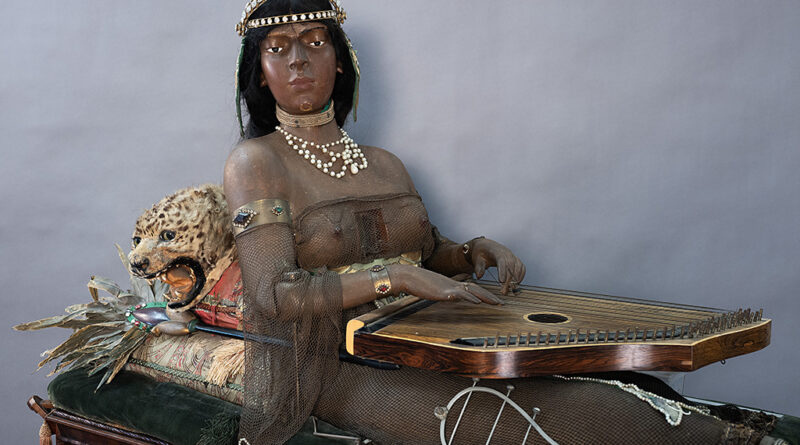
Isis
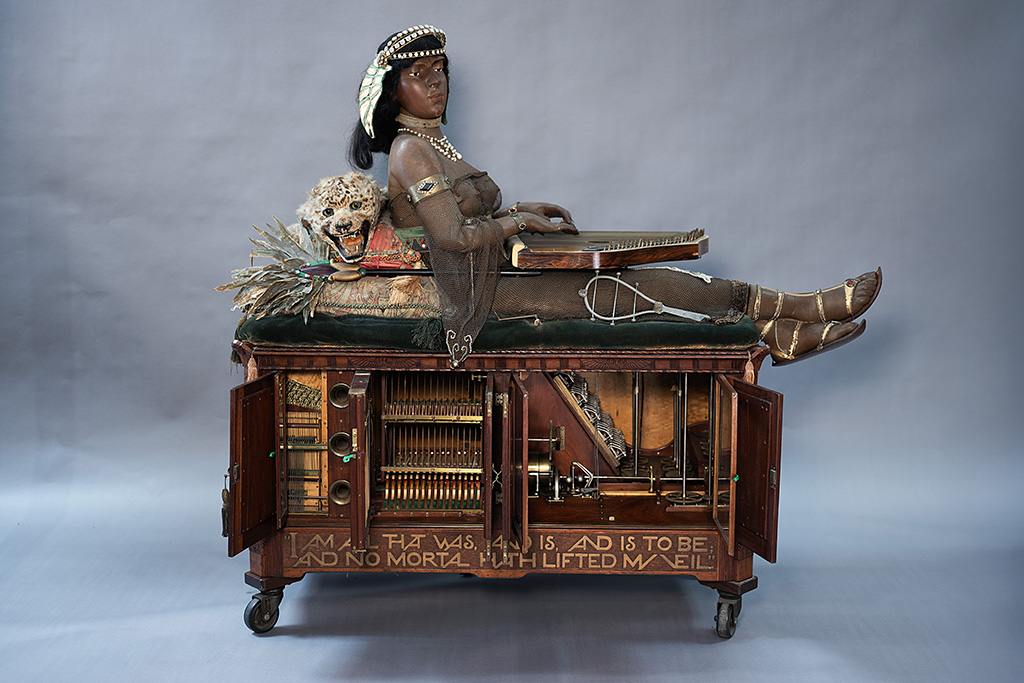
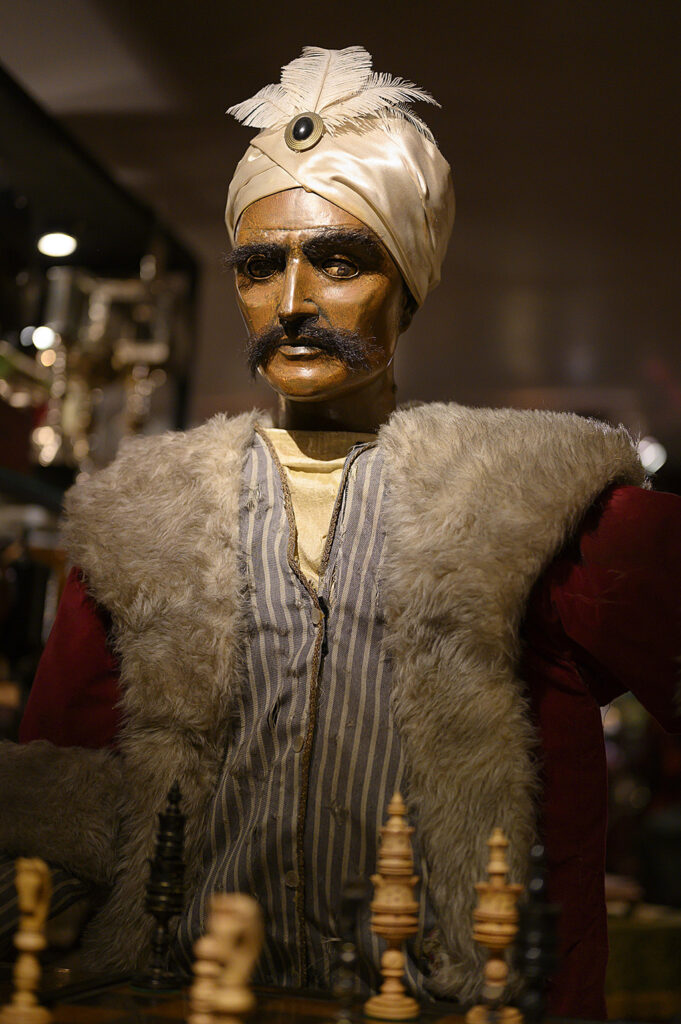
This summer I was asked to photograph Isis for John Gaughan’s column in the November issue of Genii Magazine. They were having trouble getting good images of Isis, a life-size automaton of a Egyptian zither player, with a cabinet full of clockwork mechanisms.
Isis was built in the late 1800’s by Dr. Cecil Nixon. Unlike most 20th century magicians who billed themselves as “Dr.”, Nixon was a legitimate doctor – he practiced dentistry in San Francisco, but he led a highly varied life, spending time working for the IRS and building organs – and as a touring variety artist, doing ventriloquism and performing magic.
Dr. Nixon would demonstrate Isis by opening the cabinet doors, showing off the interior clockwork mechanism, early batteries, and futuristic relay circuits. There are also parts of what look to be soundboards from pianos. Leaving most of the cabinet doors open, Nixon would wind up the clockwork and invite an audience member to come to the stage and speak the name of a popular song into the tubes that can be seen on the left side of the cabinet. If Isis knew the song, she would then play the first 16 bars of the song. She could also answer questions by shaking her head yes or no.
Like the more famous Mechanical Turk, Isis is a false automaton. The Turk could play chess at a championship level. Isis would play requested songs on her lap top zither. Both “automatons” in fact concealed a hidden performer who operated the mechanism. Amusingly, when Nixon wound the clockwork that supposedly powered Isis, he was actually lowering a control board which allows the hidden performer to operate the zither. This panel was stowed to conceal it during the presentation of the cabinet interior, which was carefully choreographed to hide the controls, the performer, and then lower the control panel.
Isis is very much a product of the time. Starting in the late 1800’s, following the (forced) opening of China and Japan to trade with the Western world, there was a surge in fascination with Middle- and Far-Eastern cultures. From the 1890’s through the 1920’sthe current day), many magicians performed Eastern-culture themed acts. The frequency diminished in the decades following, and unfortunately there are still examples to be found today. Some of these acts were loving, if misguided, homage. Some were egregious cultural appropriation (ask me about Chung Ling Soo and Ching Ling Foo sometime). Many magic props, artwork, and automatons had Eastern decorations and themes, often wildly inaccurate or nonsensical – and some are today quite offensive. This fetishizing of “exotic” cultures is uncomfortable to our current sensibilities, but I wanted to share because I thought the craftsmanship and engineering is interesting. And I’m rather proud of the pictures.
The article used several of my photos. You can see part of the article on the Genii web site (the full article is only available to subscribers). Here are some of my favorite images, not all of which made it into the magazine.
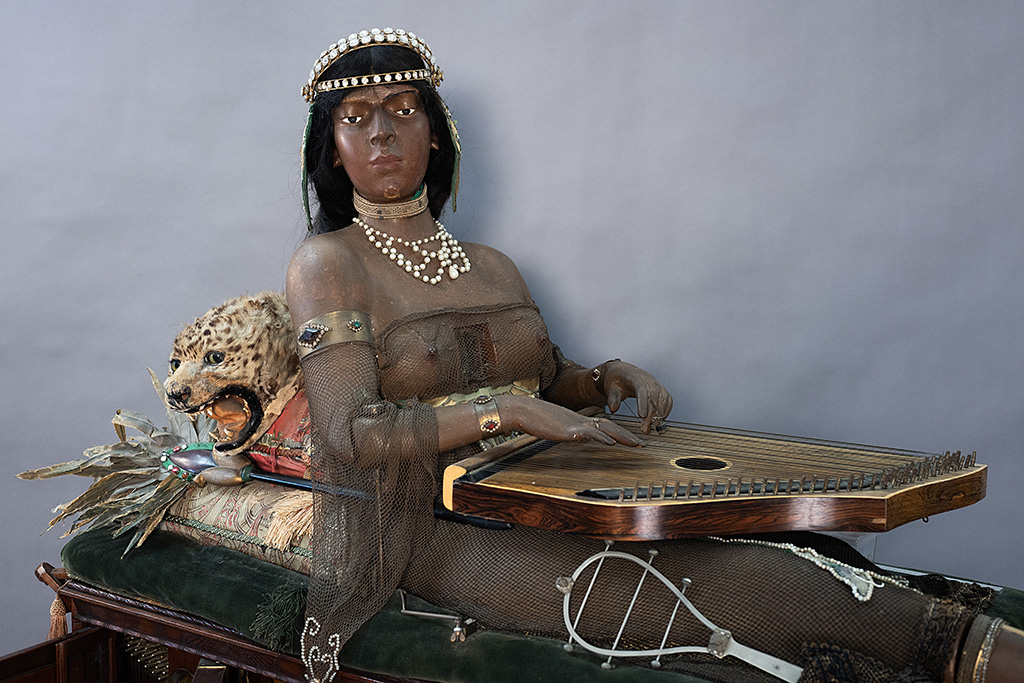
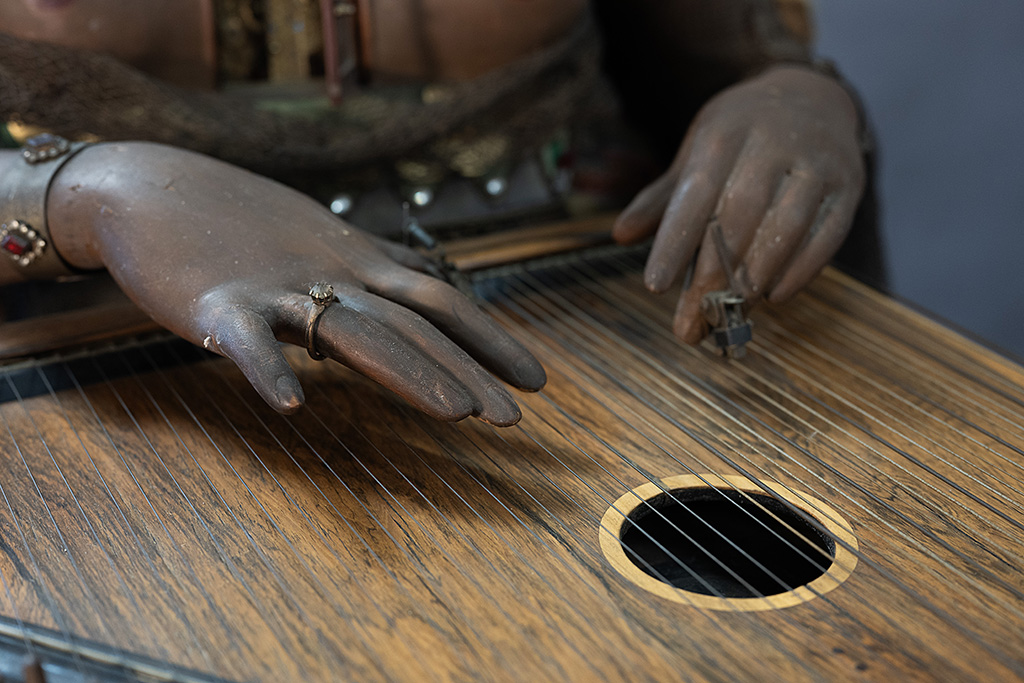
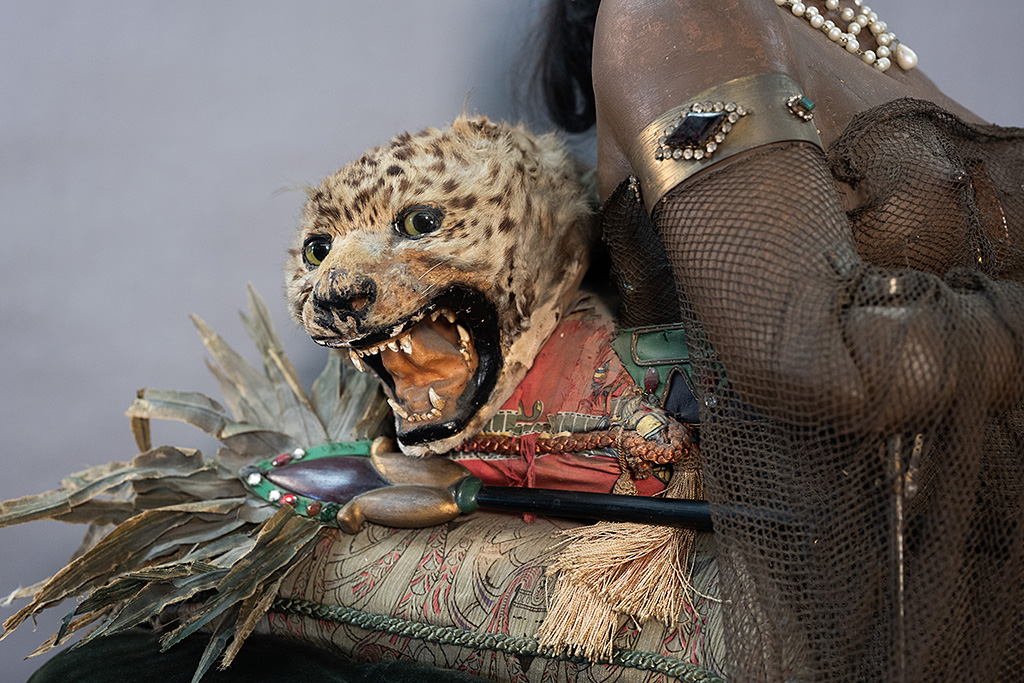
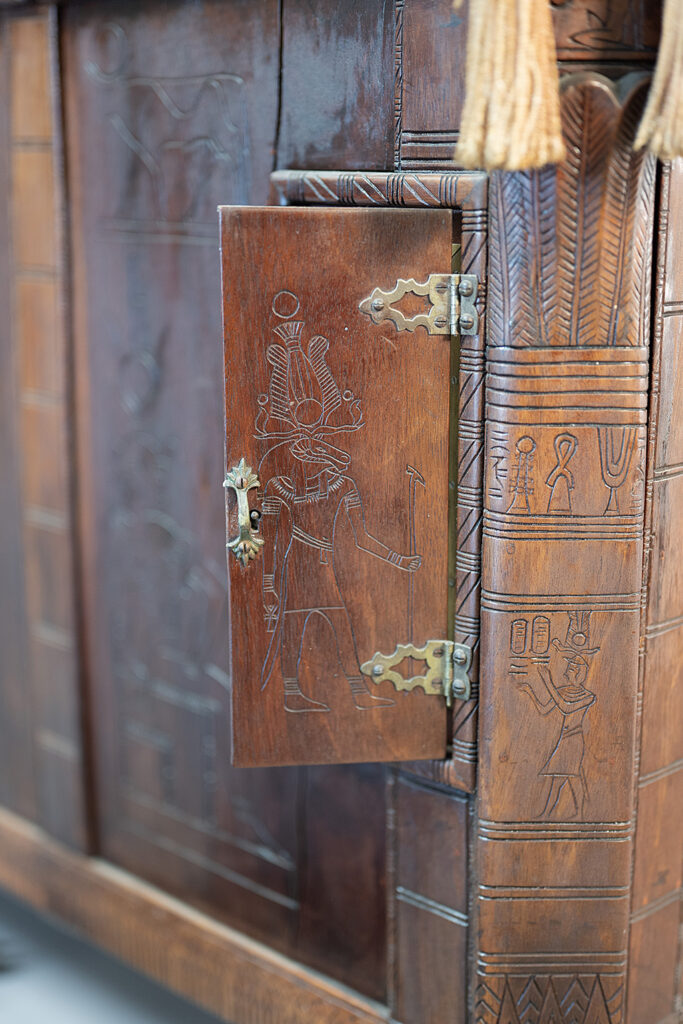
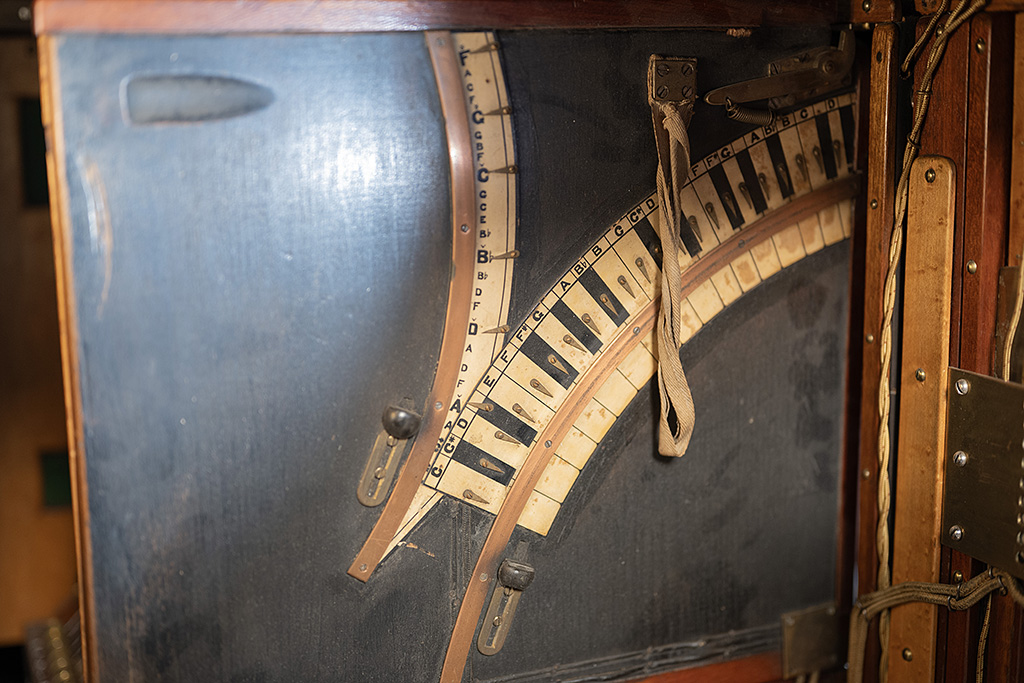
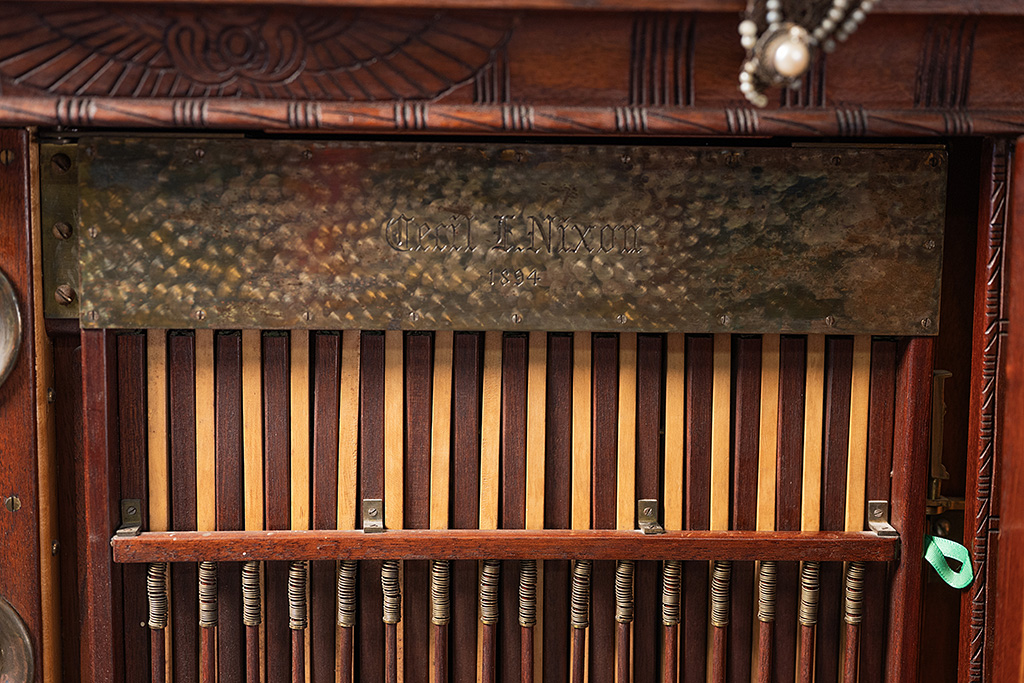
In the early 1970’s, IIsis was displayed in the Pony Express Museum in Reno, Nevada. Bill Harrah, who owned the museum, hired Harry Blackstone Jr. and John Gaughan to figure out Isis’s secrets, but Harrah was not happy with their answers (perhaps he thought it was a genuine self-working miracle?), and he refused an offer by John to buy the automaton. Even though Isis did not fit in the Old West theme of the museum, she sat on display until Harrah’s death. Harrah’s collection was put up for auction and John Gaughan was able to acquire the automaton at auction in the mid 1980’s.
John Gaughan is a legendary magic illusion builder. He has created illusions for Mark Wilson, Harry Blackstone Jr., Doug Henning, David Copperfield, and many others. He writes a monthly column for Genii Magazine that covers a historical magic artifact, many of which are held in his personal collection.
John’s workshop is in Atwater Village. It is a fully-functional shop where he fabricates and repairs illusions. Hidden inside the shop is a private museum which is full of historical pieces and recreations. The Turk was destroyed in a museum fire, though the chessboard was not in the museum at the time and was spared, so John was able to refer to it while building his recreation in the late 1980’s.
All photos taken by Theron Trowbridge. Please do not redistribute without permission